


The First Paul - Reclaiming The Radical Visionary Behind The Churchs Conservative Icon
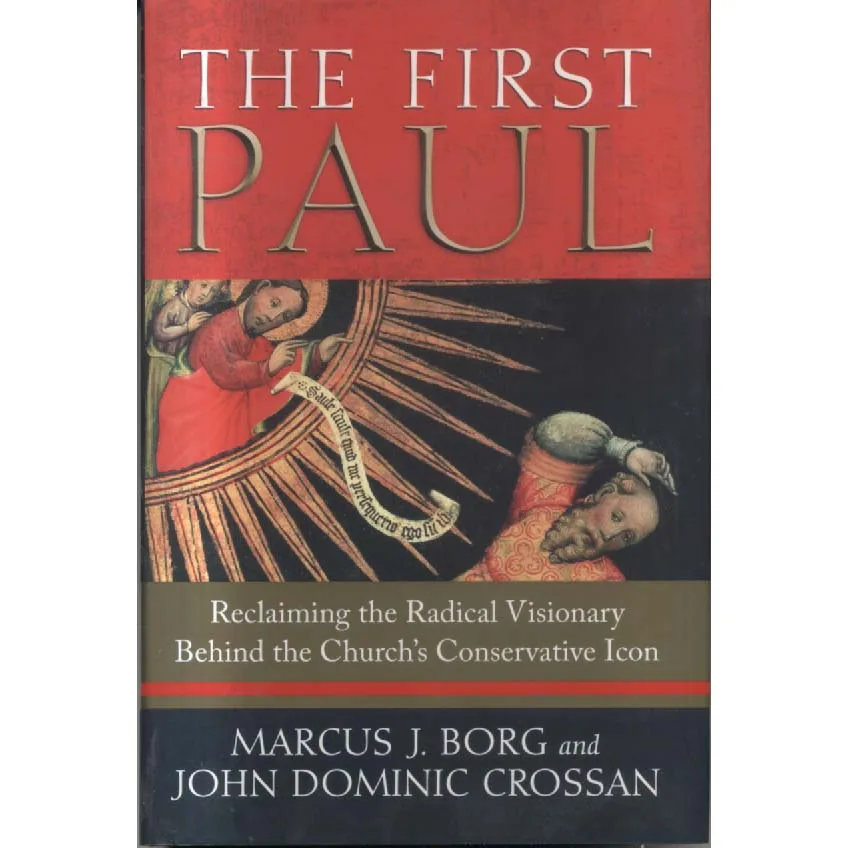
Publisher: HarperOne
Format: Hardback
ISBN: 9780061430725
The apostle Paul has a difficult reputation. To some Christians he is the great interpreter of Jesus, the energetic missionary who carried the faith across the Roman world. To others he is the man chiefly responsible for turning a radical movement into an institution furnished with rules about women, sexuality, authority and the correct conduct of everybody else. Marcus J. Borg and John Dominic Crossan suggest that both reputations have been assembled under one name, but not necessarily by one author.
In The First Paul, Borg and Crossan argue that the New Testament contains not one Paul but three. The first is the radical Paul of the seven letters generally accepted by scholars as authentic: Romans, 1 and 2 Corinthians, Galatians, Philippians, 1 Thessalonians and Philemon. The second is a more conservative Paul found in three disputed letters, while the third is the distinctly reactionary Paul of the Pastoral Epistles. Paul’s legacy, in this account, was gradually adjusted until a troublesome visionary became a much more convenient ecclesiastical spokesman.
The authentic Paul, they argue, was a Jewish mystic transformed by his experience of the risen Christ. His message challenged not only personal sin but the hierarchies of Roman imperial society. In communities where there was to be neither Jew nor Greek, slave nor free, male nor female, equality was not intended as a decorative spiritual sentiment while the existing social order continued uninterrupted downstairs.
Borg and Crossan place Paul firmly within the Roman Empire, where Caesar was proclaimed divine, military conquest brought “peace,” and political authority possessed its own religious vocabulary. Paul’s language of Lord, Son of God, salvation and good news therefore carried implications that modern readers can miss. To declare Jesus Lord was not merely to express a private devotional preference; it quietly raised the question of who was not Lord, a question Roman officials tended to regard as unnecessarily provocative.
The authors examine Paul’s teaching on grace, faith, resurrection, slavery and the status of women. They argue that later writers softened or reversed his egalitarian message as Christian communities became more settled and sought accommodation with conventional society. Radical movements frequently survive by acquiring buildings, administrators and people willing to explain why the founder did not literally mean anything too disruptive.
Particular attention is given to Philemon, Paul’s short letter concerning the enslaved Onesimus. Borg and Crossan use it to demonstrate how a Pauline letter should be reconstructed within its original human situation rather than treated as a collection of detachable theological sentences. Ancient correspondence was written to people who already knew what was happening; two thousand years later, the rest of us have opened somebody else’s post and begun constructing denominations from it.
The book does not ask readers simply to admire Paul or excuse every difficult passage attributed to him. Instead, it uses historical and textual scholarship to distinguish the earlier voice from later attempts to domesticate it. Its Paul is not the severe church official of popular imagination but an argumentative, mystical and politically dangerous follower of an equally radical Jesus.
Published by HarperOne in 2009, The First Paul is accessible biblical scholarship for readers interested in early Christianity, the historical Paul and the way religious traditions reshape their founders. Conservative readers may dispute its conclusions; progressive readers may experience the unusual sensation of discovering that Paul is not necessarily the person they have spent years blaming.
This copy is in Good condition. It shows the ordinary evidence of previous reading but remains sound, complete and ready for renewed theological examination. No later editor appears to have inserted additional instructions concerning obedience, hierarchy or church administration.
Sold by Crappy Old Books, where all thirteen Pauline letters may be discussed, but only seven will be allowed to sign the receipt.
Keep browsing: See more Religion books Other books by Marcus J Borg and John Dominic Crossan
